

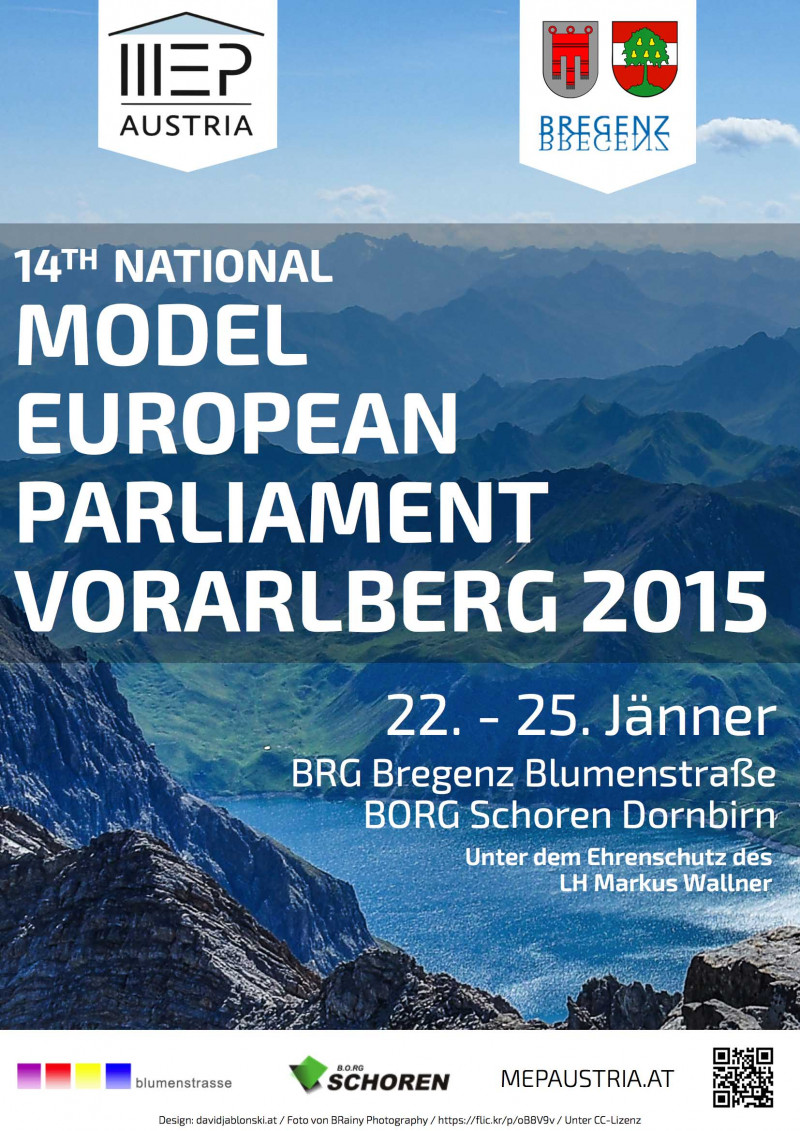
nMEP Vorarlberg 2015
January 22, 2015-January 25, 2015
Letter from the presidents
Honourable Delegates,
venerable Committee Presidents and
distinguished Student Media Officers,
It is a great pleasure to welcome you to the 14th national session of the Model European Parliament. We feel honoured to be hosting this session in Vorarlberg from
22nd to 25th January 2015.
This session will be a unique opportunity for you to make your voice heard, to be a representative of your province, to discuss political questions that affect millions of people throughout the European Union and the chance to learn something about yourselves. We don’t know what this “something” will be: You may discover that you are good at negotiating or working in teams. You may also learn how to find a compromise with people you don’t share the same opinion with. Maybe you will find out that there is no more exciting moment than holding a speech in a hall full of attentive listeners? Maybe you’ll decide that you would like to dedicate your life to working towards a brighter and better future for the EU? We don’t know. What we do know is that if you truly open your heart and mind to this unforgettable experience, you will make this weekend and this session will in return change the very way you look at the world. Believe in yourself, work even harder and make friendships for years to come.
Bregenz and Dornbirn are our two capitals, one is home toVorarlberg’s administration and government with its impressive art and culture events on Lake Constance the other is our commercial and industrial centre, and the
most populated city in Vorarlberg situated in the Rhein valley. To get you better acquainted with Vorarlberg and its landmark cities we have prepared a programme featuring the town halls ofBregenz and Dornbirn and our province parliament, das Landhaus where the GA will be held.
We have invited interesting speakers from different tiers of public life: the Speaker of the Vorarlberg Landtag Mag. Sonderegger, former EU parliamentarian Mag. Herbert Bösch, DI Markus Linhart, Town Mayor of Bregenz and Dipl.-Vw. Andrea Kaufmann Town Mayor of Dornbirn, and Dr. Wolfgang Wolte, ambassador to Brussels leading up to Austria’s accession to the European Union twenty years ago. The committee meetings will be held at the two participating schools: BG Bregenz /Blumenstraße and the BORG Schoren-Dornbirn. You will experience how the decision – making process of the European Parliament works. We will have team building activities so you can get to know each other better before we will all come together to enjoy “Käsknöpfle” at the famous “Gasthaus Pfänderdohle”.
Keep one very important thing in mind: the essential part of the Model European Parliament is you, the participant. You will meet like-minded ordifferent- minded youngsters from all over Austria and work together on a resolution trying to find common ground on sensitive issues in your committees. Your success will rely on your teamwork trying to pass your resolution in the General Assembly. We wish you good luck. How successful this weekend is for you personally will depend on you. Active participation might involve things you have never done before, so you should be willing to put an effort into your preparation first.
Be confident and you will see that there is nothing to stopyou. We are really looking forward to an interesting
and productive session.
Your Presidents,
Gallus Vögel (BG Blumenstraße)
Michael Hinteregger (BG Blumenstraße)
Kay Kaufmann (Theresianische Akademie Wien)
Maria Kupriyanova (Theresianische Akademie Wien)
Welcome Notes
Grußwort von Landeshauptmann Mag. Markus Wallner
Liebe Jungparlamentarierinnen und Jungparlamentarier,
Österreich feiert heuer seine 20-jährige Mitgliedschaft in der Europäischen Union. Die Chancen, die sich mit dem Beitritt zur Gemeinschaft eröffnet haben, wurden bis heute sehr gut genutzt. Für Vorarlberg lässt sich das anhand von verschiedenen Kennzahlen eindrucksvoll belegen. So verzeichnete das Land eine 200-prozentige Steigerung beim jährlichen Exportvolumen seit 1995, es gab ein deutliches Plus im Tourismus und auch bei der Beschäftigung konnten Rekordwerte verbucht werden. Dazu haben die offenen Grenzen mit Personenfreizügigkeit und Handelserleichterungen sowie die gemeinsame Währung maßgeblich beigetragen.
Nur mit einem starken Europa, das politisch und wirtschaftlich in der Welt eine Rolle spielt, sind wir in der Lage, Wohlstand, Wachstum und Stabilität, aber auch Sicherheit und Freiheit dauerhaft abzusichern. Ein Rückfall ins Nationale, in ein Gegen- statt ein Miteinander, stellt ein Szenario dar, das sich niemand ernsthaft wünschen kann. Umso wichtiger ist es, daß die Menschen hinter dem europäischen Einigungsprojekt stehen und aktiv daran mitwirken, Europa ein Gesicht, eine Identität zu geben. Der Glaube an Europa darf nicht verloren gehen.
Mehr denn je kommt es deshalb gerade jetzt darauf an, die Jugendlichen für Europa zu gewinnen und zu begeistern. Als eine besonders wertvolle Initiative hat sich in diesem Zusammenhang das Nationale Modell Europa Jugendparlament erwiesen, dass für seine Session nach 2003 heuer wieder Vorarlberg als Austragungsort ausgewählt hat. Sehr gerne habe ich den Ehrenschutz übernommen.
Alle Teilnehmerinnen und Teilnehmer darf ich inVorarlberg ganz herzlich begrüßen. Meinen Dank richte ich an die Organisatoren des MEP Austria in Wien sowie an die involvierten Partnerschulen, das BG Blumenstraße in Bregenz und das B.O.RG Schoren in Dornbirn.
Ich wünsche konstruktive Gespräche und einen angenehmen Aufenthalt im “Ländle”.
Mag. Markus Wallner
Landeshauptmann
Grußwort des Präsidenten des Vorarlberger Landtages
Liebe Jungparlamentarierinnen und Jungparlamentarier!
Das gemeinsame, friedliche Europa ist heute für uns eine Selbstverständlichkeit. Seit 20 Jahren sind wir Österreicher EU-Bürger. Wir bauen Grenzen ab, wir kaufen mit Euro ein und sind mannigfaltig vernetzt. Wir wachsen als Europäerinnen und Europäer wirtschaftlich und kulturell – und wir wachsen zusammen. Sie alle sind in der europäischen Union groß geworden und leben das täglich.
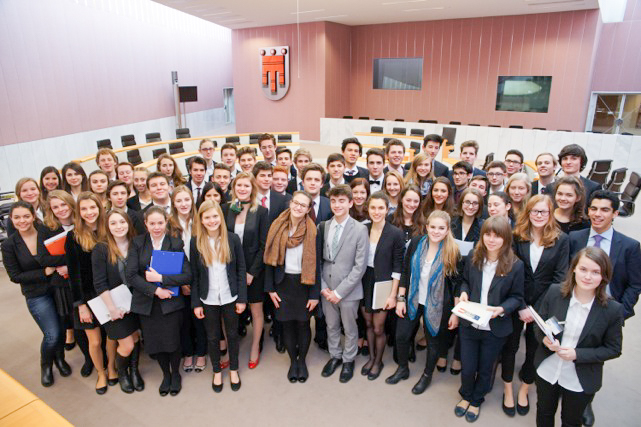
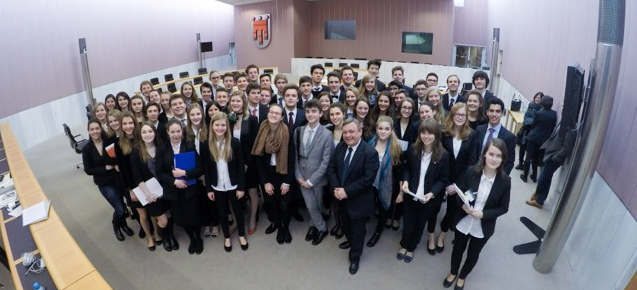
Doch das Europa, wie wir es kennen, ist alles andere als selbstverständlich. Es ist das Ergebnis eines langjährigen Prozesses, den wir auch inZukunft weiter intensivieren wollen. Wir haben die Verantwortung, unser Europa konstruktiv und kritisch mitzugestalten. Als Landtagspräsident und als Obmann des Europaausschusses freue ich mich sehr, dass Sie diese Verantwortung in die eigenen Hände nehmen und als Nationales Europäisches Jugendparlament im Jahr 2015 in Vorarlberg, imPlenarsaal des Vorarlberger Landtags, tagen.
Die Idee und die Praxis der Nationalen Europäischen Jugendparlamentssitzungen haben sich bewährt. Diese Sitzungen und die dabei behandelten Themen sind ein klares Zeugnis dafür, mit wie viel Engagement und Kompetenz Sie an Ihr Europa herangehen und wie Sie es aktiv mitbestimmen wollen. Mit den Bereichen Gesundheit und Bildung, regionale Entwicklung und Umwelt sprechen Sie Themen an und suchen Lösungen für Probleme, die Sie direkt betreffen.
Damit sind Sie Vorbilder. Die Demokratie bzw.die Teilhabe am politischen Leben benötigt informierte und motivierte Jugendliche wie Sie.
Das Jugendparlament bietet Ihnen eine sehr gute Einstiegsmöglichkeit in die Praxis der politischen Diskussion. Was für die Abgeordneten des Vorarlberger Landtags zutrifft, das mögen nun auch Sie in Ihren Debatten beherzigen: Gerade wenn die Auffassungen sehr gegensätzlich sein mögen, geht es darum sachlich zu argumentieren und nach Möglichkeit einen Konsens zu finden.
Ich darf den Organisatoren von MEP Austria sowie den involvierten Partnerschulen, dem BG Blumenstraße in Bregenz und dem BORG Schorenin Dornbirn, für ihr Mitwirken danken. Allen Teilnehmerinnen und Teilnehmern wünsche ich wertvolle und spannende Erfahrungen bei dieser 14. Nationalen Sitzung des „Model European Parliament Austria“ und darüber hinaus einen eindrücklichen Aufenthalt in Vorarlberg.
Mag. Harald Sonderegger
Präsident des Vorarlberger Landtags
Grußwort des Bürgermeisters von Bregenz
Mit dem Beitritt zahlreicher Oststaaten vor gut zehn Jahren und die Erweiterungen in der Folgezeit hat Österreich seine ursprüngliche Randlage in der Europäischen Union endgültig überwunden. Unsere Heimat befindet sich heute im Zentrum eines Kultur- und Wirtschaftsraumes mit mehr als einer halbe Milliarde Menschen.
Aber die Formel „mittendrin statt nur dabei“ bezieht sich natürlich nicht nur auf den geografischen Längen- oder Breitengrad. Sie ist auch ein Synonym für den Willen des Volkes, den großen, gemeinsamen Lebensraum ökonomisch, ökologisch, sozial und kulturell mitzugestalten. Gerade wer von der Jugend erwartet, nicht politikverdrossen zu sein, sondern sich aktiv einzubringen, muss sich um passende Instrumente der Partizipation bemühen.
Vor diesem Hintergrund freut es mich sehr, dass auch das Bregenzer Rathaus einer der Veranstaltungsorte des 14. Nationalen Europäischen Jugendparlaments ist. Hätte ich einen Wunsch frei, wäre esder, dass die Schülerinnen und Schüler nicht nur konstruktiv über aktuelle europäische Fragen diskutieren, sondern dass ihnen diese spannende Aufgabe auch Spaß macht und hilft, Persönlichkeitsentwicklung, soziale Kompetenz und Kommunikationsfähigkeit im eigenen Interesse und im Interesse der Demokratie weiter voranzutreiben.
Viel Erfolg!
DI Markus Linhart
Bürgermeister
Grußwort der Frau Bürgermeisterin von Dornbirn
Geschätzte Jungparlamentarier und Jungparlamentarierinnen!
Dornbirn, die zehntgrößte Stadt Österreichs und größte Stadt Vorarlbergs, ist eine junge und sehr engagierte Stadt, die weit über die Stadt- und Landesgrenzen hinaus für eine umfassende und vielfältige Jugendarbeit bekannt ist. Viele ehren- und hauptamtlich engagierte Personen leisten hier in den zahlreichen Vereinen – in Sport, Kultur, offener und verbandlicher Jugendarbeit – einen unverzichtbaren Beitrag.
In Dornbirn finden junge Menschen attraktive Freizeit-, Bildungs- und Arbeitsmöglichkeiten vor: Berufsorientierung, Pflichtschulabschlusskurse, Jugendinformationszentrum, Musikschule, Fachhochschule, geförderte Jugendwerkstätten, zwei Jugendhäuser, eine Skatehalle und vieles mehr.
In regelmäßigen Klassensprechertreffen und Jugendforen ist die Stadt laufend im Dialog mit jungen Menschen. Es ist uns wichtig, diese in Entscheidungsprozesse einzubeziehen. Diese langjährigen Bemühungen werden am Mittwoch, den 28.1.2015 mit dem Demokratiepreis des Österreichischen Parlaments ausgezeichnet. Darüber freuen wir uns sehr.
Ich heiße Sie bei uns hier in Dornbirn herzlich willkommen. Genießen Sie Ihren Aufenthalt, bleiben Sie engagiert, denn:“Wer sich engagiert, hat mehr vom Leben!“
Dipl.-Vw. Andrea Kaufmann
Bürgermeisterin der Stadt Dornbirn
Programme
Unter dem Ehrenschutz des Herrn Landeshauptmann von Vorarlberg Mag. Markus Wallner
Bregenz/Dornbirn 22. – 25. 1. 2015
Do 22. Januar
abends Ankunft der Delegierten und Betreuer in Bregenz vor 20:30; Unterbringung bei Gastfamilien
Fr 23. Januar
07:45 – Eintreffen der Delegierten
08:30 – 09:20 – Eröffnung im Rathaus Bregenz
Rathausstraße 4, 6900 Bregenz, Tel.: +43 (0)5574 / 410-3001 Dipl.-Ing. Markus Linhart, Bürgermeister von Bregenz ’Bregenz im Schnittpunkt Europas’ Dir. Klemens Voit, Direktor BG Bregenz Blumenstrasse Michael Hinteregger, Gallus Vögel & Maria Kupriyanova Presidents of the National MEP AssemblyMotivational speakers
Ingrid Hampe, former MEP delegate, London School of Economics Mag. Gottfried Oehl , MEP Austria Coordinator
09:20 – 10:20 – Impulsreferat:
Mag. Herbert Bösch, MdEP i.R., Stadt Bregenz ’20 Jahre EU: Österreich und Europa am Scheideweg?’ –danach Pause für Erfrischunegen–10:30 – 11:15 – Opening Ceremony: Vorstellen der Bundesländer Delegationen
12:00 – 13:00 – Mittagessen im Landhaus Restaurant
13:15 – 15:15 – Komiteetreffen im BG Blumenstrasse
15:45 – 17:45 – Teambuilding
18:15– 21:30 – Kulturabend : Pfänder: Käsknöpfle Essen
Gasthaus Pfänderdohle Pfänder 1, A-6911 Lochau, Tel.+43 (0) 5574 43073Sa 24. Januar
08:00 – Eintreffen der Delegierten
08:30 – 9:00 – Eröffnung im Rathaus Dornbirn
Dipl.-Vw. Andrea Kaufmann, Bürgermeisterin von Dornbirn Elmar Luger MSc, Leiter der Jugendabteilung der Stadt Dornbirn Kay Kaufmann und Gallus Vögel, Presidents of the National MEP Assembly09:00 – 10:00 – Impulsreferat:
Botschafter i.R. Dr. Wolfgang Wolte, ”20 Jahre EU Mitgliedschaft Österreichs: Rückblick – Vorschau”10:00 – 10:30 – Pause für Erfrischungen
11:00 – 13:30 – Komiteesitzungen im BORG Schoren
13:45 – 14:30 – Mittagessen im Schulcafe
15:00 – 18:00 – Delegation meeting und Lobbying
18:30 – Abendessen bei den Gastfamilien
20:00 – Kulturprogramm:
Bregenz Fasching: Hotel Weisses Kreuz Römerstraße 5 · A-6900 Bregenz, Tel: +43 (0) 5574 4988-0So 25. Januar
07:45 – Eintreffen der Delegierten im Landtag Vorarlberg
Römerstraße 15, 6900 Bregenz08:30 – 9:00 – Opening ceremony
Landtagspräsident Mag. Harald Sonderegger, ‘Europa der Regionen‘09:00 – 13:00 – Plenary Session
13:00 – 13:30 – Closing Ceremony
Michael Hinteregger, Gallus Vögel,Kay Kaufmann und Maria Kupriyanova Presidents of the National MEP Assembly Mag. Gottfried Oehl, MEP Austria Coordinator 14:00 – 15:00 – Mittagessen im Landhaus RestaurantAbfahrt der Delegationen
Committees & Issues
1 Committee on Environment, Research and Industry
The question of
how EU countries can secure sustainable energy supplies and independence from foreign fossil fuels imports. Working towards a decarbonised European economy whilst trying to maintain global competitiveness, which reforms and policies should the EU pursue in order to further reduce greenhouse gas emissions?
2 Committee on Public Health and Food Safety
The question of juvenile health:
Should the EU play a role in protecting juveniles from alcohol and drugs abuse, smoking and unhealthy eating habits? If so, how should EU regulation relate to national regulation in this field? How can the member states of the EU cooperate to safeguard the health of young people against mental stress, alcohol abuse, smoking and poor levels of nutrition? What role can schools and educational programmes play?
3 Committee on Culture and Education
The question relating to the modernisation of higher education
The EU maintains a commitment to improving the education of young people and encouraging social mobility. What can the EU do to ensure that education and mobility of young people is indeed improved? Should there be an EU-wide education policy to ensure the same standards in education and skills for those wishing to work within the EU?
4 Committee on Regional Development
The question of the role of cities and urban areas in managing cohesion policy funds in meeting the objectives of Europe 2020:
Since more than two-thirds of European citizens live in cities, urban areas can play a leading role in intelligent growth. How can their role be strengthened in developing and implementing social, environmental and youth empowerment policies which will contribute to achieving the objectives of the EU 2020 strategy; and how can cities with innovative ideas and concepts be supported in the field of urban development.
Media
ORF Vorarlberg
ORF TVThek
Downloads
