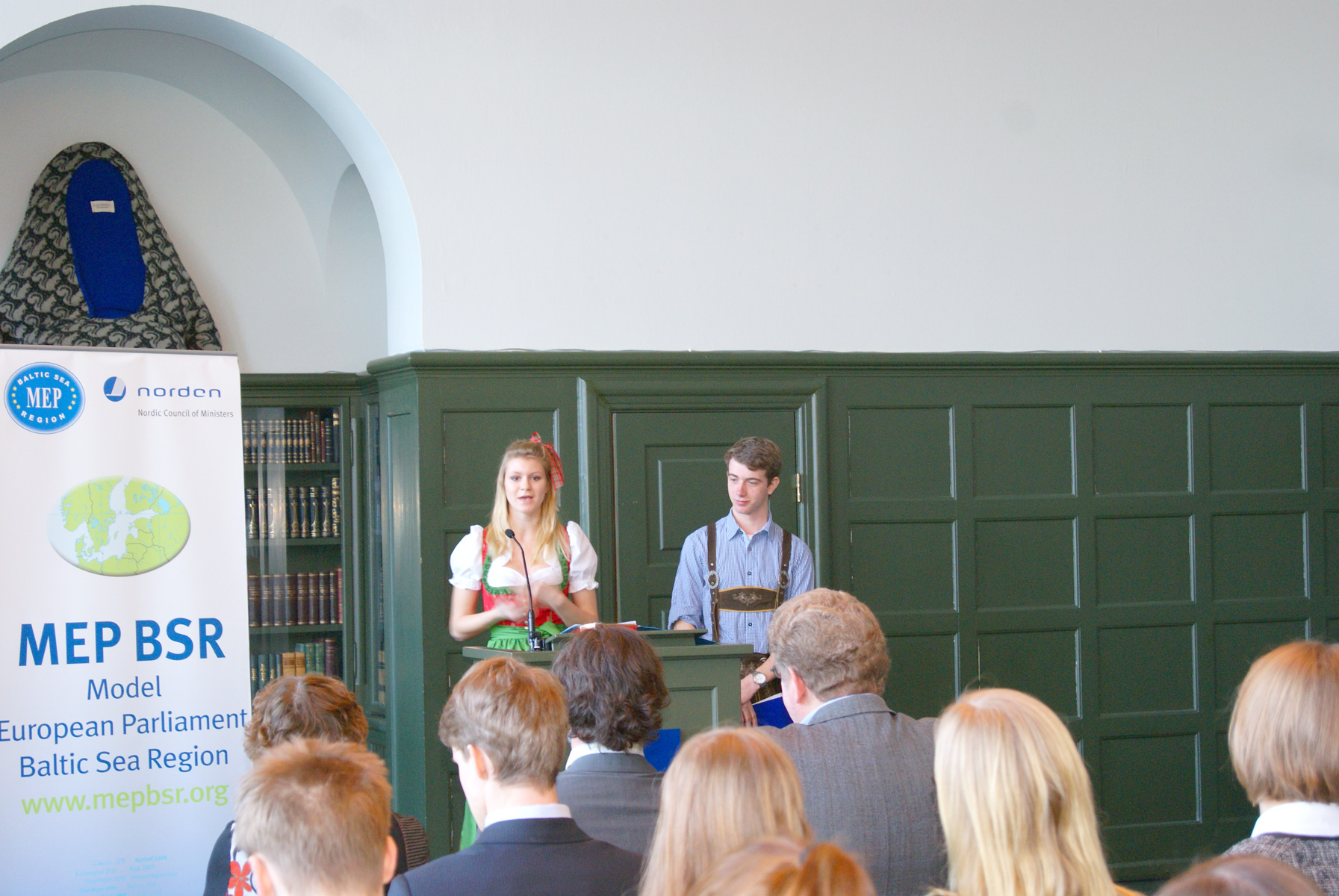
MEP BSR Iceland 2013
March 16, 2013-March 22, 2013
Programme
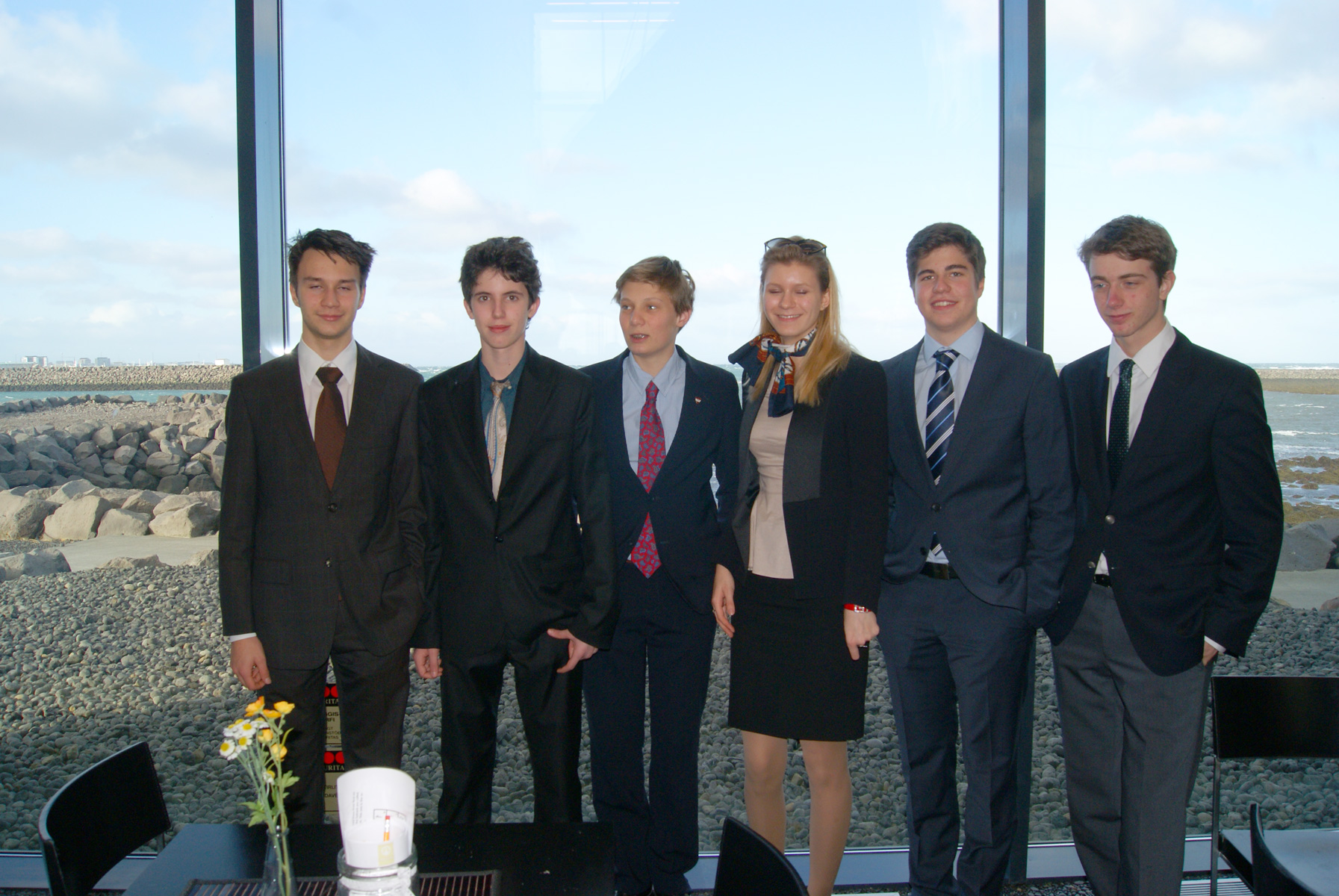
Theresianum delegation:
Alexander BRENN (7b) Committee president
Maria KUPRIYANOVA (6a) Head of Delegation Austria
Christian SCHMID (6e)
Nepomuk TRAUTTMANSDORFF (6e)
Saturday 16 March
departure for Copenhagen and Reykjavik
Sunday 17 March
Check-in: registration for teambuilding
19.00 Meeting for GA President, CP’s and NN (location to be announced)
Monday 18 March
08.30 Arrival
09.00 Opening Ceremony at Alþingi, 150 Reykjavík
Welcoming remarks by
Speakers:
Mrs. Nina Nørgaard, Administrative Coordinator of MEP BSR
Mr. Össur Skarphéðinsson, Minister of Foreign Affairs tbc
Mrs. Katrín Jakobsdóttir, Minister of Education and Culture
Heads of Delegations from participating countries
11.00 Teambuilding/transfer to committee locations in Sudurnes
12.00 Lunch
13.00–17.00 Committee work (locations will be announced)
Dinner
19.30 Teachers’/directors’ meeting
Tuesday 19 March
09.00–16.00 Committee work cont./Lunch (incl.)
Resolutions to be handed in at 16.00/Correction Panel/Printing
16.00 Sightseeing /free afternoon/Trip to the Blue Lagoon for everybody interested.
19.00 Buffet dinner
Wednesday 20 March
09.00 Excursion around Southern Iceland for everybody.
18.00 Dinner
20.00 National delegation meetings (location to be announced)
Thursday 21.3
08.30 Arrival
09.00-16.00 General Assembly at Alþingi, 150 Reykjavík
Speakers:
Mr. Ólafur Ragnar Grímsson, President of Iceland tbc
Mr. Hans Lindemann, MEP BSR
Mr. Thorkil Klint, President of the GA
Three resolutions in the morning.
12.30-13.30 Lunch
Two resolutions in the afternoon
Closing remarks by Ms Nina Nørgaard, MEP BSR
Reception in Reykjavik Town Hall
19.00 Buffet dinner and cultural evening
Friday 22 March
Departure for all delegations
14:15–18:15 Reykjavik – Copenhagen (IcelandicAir)
20:25–22:00 Copenhagen – Wien (NIKI)
Committees & Issues
I. Committee on Environment, Public Health and Food Safety (1)
The question of the protection of biodiversity
The EU strives to protect and restore flora and fauna by creating e.g. a network of nature reserves Natura 2000. This might entail limitations on sectors such as recreation, agriculture, fishing and housing, with consequences for employment. How can these competing interests be addressed?
http://ec.europa.eu/environment/nature/natura2000/sites_hab/biogeog_regions/index_en.htm
II. Committee on Environment, Public Health and Food Safety (2)
The question of how to fight global warming
Global warming is the increase in the Earth’s temperature as the result of greenhouse-gas emissions. As the phenomenon continues, devastating consequences might be felt across the globe. The ocean may be one of the hardest hit of the world’s resources. How can the problem be fought?
III Committee on Social Affairs
The question of youth unemployment in Europe
Europe’s young people are suffering disproportionately in the economic crisis and might become ‘a lost generation’. How can the problem be tackled?
http://www.publicserviceeurope.com/article/2804/youth-unemployment-europes-lost-generation
IV Committee on Culture and Education
The question of how to educate young people to become global citizens
The mobility of young people is essential in promoting a sense of belonging to Europe and enhancing social and occupational integration. However, the mobility of young people is not widespread. In what ways can mobility be increased?
http://europa.eu/legislation_summaries/education_training_youth/youth/ef0008_en.htm
V Committee on Constitutional Affairs
The question of how to bring the EU/Europe closer to its citizens
In times of crisis many European citizens seem to lose interest in the EU and focus more narrowly on national matters. In what way can this lack of interest in the development of the EU be addressed?
http://ec.europa.eu/citizenship/european-year-of-citizens-2013/index_en.htm
Gallery