


nMEP Burgenland 2020
January 23, 2020-January 26, 2020
Letter from the presidents
Venerable Committee Chairs, Honourable Delegates and Student Media Officers, Ladies and Gentlemen,
It is a pleasure to welcome you to the 19th national session of the Model European Parliament in Burgenland.
The session will take place in Eisenstadt and Mattersburg, two beautiful cities located in the youngest province of the Republic of Austria, in Burgenland. Parallel to this year’s session regional elections will take place. Therefore you will get the unique opportunity to experience the political situation of Burgenland up close. During your stay in Burgenland, you will also listen to keynote speakers talk about political issues not only regarding Burgenland itself but also the European Union.
Often overshadowed by better known destinations of Austria, Burgenland is decidedly different. There are no high mountains and only very little snow. Instead this region offers 300 days of annual sunshine with a wonderfully mild climate. It is also well known for its beautiful vineyards, stunning landscape and of course the largest lake in Austria, the Neusiedler See. In addition, the capital Eisenstadt possesses Burgenland’s grandest and loveliest castle, the Esterházy Palace, with a strong Haydn association.
However, Burgenland is Austria′s most Eastern province and joined the Republic only in 1921. For decades this underdeveloped, rural border region could not keep pace with the rest of Austria. But much has changed since the Iron Curtain fell down in 1989 and, in particular, since Austria joined the EU in 1995. Today, Burgenland is a model European region when it comes to the use of renewable energy, is home to six technology centres and is making determined efforts to develop projects in the areas of research, technology and innovation.
On the 12 June 1994 two thirds of the Austrian electorate voted “yes” in the referendum concerning Austria’s accession to the European Union. In commemoration of this fundamental decision, let us look back at what paved the way for our membership.
On 17 July 1989, the so-called “letter to Brussels” containing Austria’s application for membership was handed over to the then French Foreign Minister, Roland Dumas, in his capacity as Chairman of the Council of Foreign Ministers of the European Community.
After the Council of the European Community had agreed to the accession procedure in July 1989 and the European Commission had approved Austria’s accession in July 1991, negotiations were formally opened on 1 February 1993.
A total of 9 rounds of negotiations at ministerial level, 130 meetings to examine the acquis and 72 technical discussions with the respective ministries were on the agenda. Less than a year and a half later, on 12 April 1994, the accession negotiations were formally concluded.
At the European Council in Corfu on 24 and 25 June 1994, during Greece’s EU Presidency, the Accession Treaty and the Final Act were signed by Federal Chancellor Franz Vranitzky, Foreign Minister Alois Mock, Section Head Ulrich Stacher and Ambassador Manfred Scheich.
The ratification of the Accession Treaty by the National Council took place on 11 November 1994, the approval of the Federal Council on 17 November 1994. On 22 November 1994, the instrument of ratification was signed by President Thomas Klestil and Chancellor Franz Vranitzky and deposited in Rome on 24 November 1994.
After a long journey marked by dedication, hard work and the prospect of a promising future, Austria finally joined the European Union on 1 January 1995.
In this session there will be four committees. Each one of them is going to focus on a crucial issue regarding the future of the European Union.
Firstly, the Committee on Environment, Public Health and Food Safety will revolve around dealing with greenhouse gas emissions from livestock – one of the most important current political issues. What can European countries do to reduce the environmental impact of livestock? Secondly, the Committee on Culture and Education will ask themself how the European Union shall deal with challenges regarding inclusion of migrant youths in the economy and society. What measures can governments take to leave no young person behind?
Thirdly, the Committee on Employment and Social Affairs will work on a resolution proposing solutions to the question of dealing with employment challenges posed by digitalisation. The job market is changing – but how will this affect European Member States?
Last but not least, the Committee on Transport and Tourism will deal with the question of dealing with mass tourism and its effects on UNESCO protected heritage sites and monuments. How is the European Union going to ensure the protection of such sites whilst maintaining one of economy‘s most important factors – tourism?
We surely are looking forward to meeting all of you in Burgenland this January and are hoping for fruitful debates and new found friendships.
Your presidency
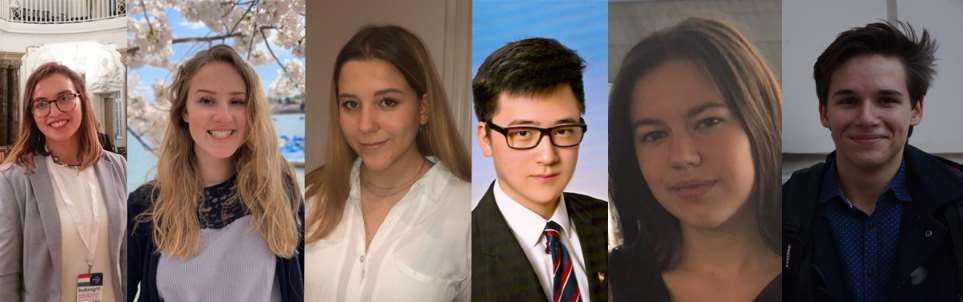
FLTR: Reka Bapstan (BG BRG Mattersburg), Sophie Parsche (Theresianische Akademie), Marlene Reiser (AkG Salzburg), Paul Feng(Theresianische Akademie), Hannah Reinisch (BG BRG Klosterneuburg), Luka Kovacevic (ORG der Franziskanerinnen Wels)
Welcome Notes
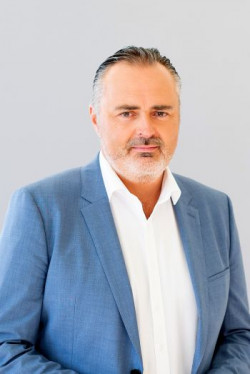
LH Hans Peter Doskozil
Welcome Note from LHM Hans Peter Doskozil
Sehr geehrte Damen und Herren,
liebe Jugendliche!
Wir feiern heuer 25 Jahre Beitritt zur Europäischen Union. Als Sie zur Welt gekommen sind, war Österreich bereits Teil der EU. Unser Land – insbesondere das Burgenland – hat sich seit dem Beitritt zur EU enorm und rasant weiterentwickelt. Sie haben diese großen Entwicklungen naturgemäß nur zum Teil mitbekommen und für Sie sind viele Dinge selbstverständlich. Doch das war nicht immer so. Das Burgenland etwa zählte 1995 zu den am wenigsten entwickelten und damit ärmsten Regionen in der damaligen EU. Heute ist das nicht mehr vorstellbar und wir sind froh, dass unser Land in so vielen Bereichen aufgeholt hat und sogar Vorreiter ist.
Dass wir auch weiterhin so privilegiert leben können, bedarf viel Arbeit und Mitarbeit. Umso mehr freut es mich daher, dass Sie nach Eisenstadt gekommen sind, um an der 19. Nationalen Europäischen Jugendparlamentssitzung teilzunehmen und sich einzubringen.
Es ist Ihre Zukunft, die vor Ihnen liegt und die mit vielen Herausforderungen in verschiedensten Bereichen – von Energie und Umwelt bis hin zu Verkehr oder Jugendbeschäftigung – verbunden ist. Ihr Interesse und Ihr Engagement ist daher nicht nur für Sie selbst, sondern auch für uns alle von großer Bedeutung.
Ich wünsche Ihnen regen Austausch und viel Erfolg für Ihre Zukunft!
Hans Peter Doskozil
Landeshauptmann Burgenland
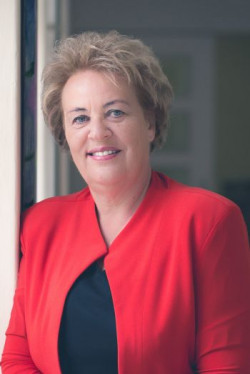
LT-Präs Verena Dunst
Welcome Note from LT-Präs Verena Dunst
Sehr geehrte Jungparlamentarierinnen und Jungparlamentarier!
Demokratie lebt davon, dass die Menschen sich einbringen. Das Mitmachen und sich einmischen, Standpunkte zu haben und diese zu vertreten, etwas bewirken zu wollen und das auch tun. Das sind die wichtigsten und wesentlichsten Merkmale einer lebendigen Demokratie und es ist die Jugend die unsere Zukunft gestalten wird.
Im Rahmen der burgenländischen Demokratie-Offensive #politik-er-leben wurde eine Studie in Auftrag gegeben, um das Verständnis der Jugend für Politik zu erheben. Das Ergebnis war, dass 77 % der Jugend an der politischen Entwicklung im Land interessiert ist. Ein sehr guter Wert. Die Studie zeigt aber auch, je früher Jugendliche lernen zu diskutieren und Beteiligungsmöglichkeiten kennen, desto eher sind sie als Erwachsene an Politik interessiert.
Ich freue mich daher über jede Initiative, die jungen Menschen Demokratie und demokratische Prozesse näher bringt und bin sehr stolz, Sie als Jungparlamentarier und Jungparlamentarier bei der 19. Nationalen Sitzung des Europäischen Jugendparlaments, im 25. Jubiläumsjahr des EU-Beitritts Österreichs, im Burgenland, begrüßen zu dürfen.
Ich wünsche Ihnen eine spannende und erfahrungsreiche Zeit, viele nette Begegnungen und vor allem viel Freude bei der politischen Arbeit!
Ihre
Verena Dunst
Präsidentin des Burgenländischen Landtages
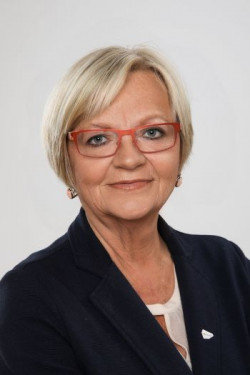
Ingrid Salamon, BGM Mattersburg
Welcome Note from BGM Ingrid Salamon
Europa in Mattersburg
Ich bin sehr froh und ein bisschen stolz, dass diese Tagung heuer auch in Mattersburg stattfindet.
Unsere Stadt hat eine große Verbundenheit mit Europa. 2005 feierten wir in Mattersburg die 10jährige Mitgliedschaft Österreichs zur EU. Damals kamen Botschafter und Delegierte aus Schweden und Finnland, zwei Staaten die zur gleichen Zeit wie Österreich der EU beigetreten sind nach Mattersburg, um dieses Ereignis zu feiern.
Ein Jahr später fand das „Fest der französischen Sprache“ in Mattersburg statt, wo SchülerInnen aus Europa unsere Stadt besuchten.
Bei beiden Veranstaltungen war die Jugend sehr stark eingebunden und ich erinnere mich gerne daran zurück. Diese Jugend ist die Zukunft von Europa.
Ich finde das gegenseitige Kennenlernen der verschiedenen Kulturen und das Erlernen neuer Sprachen als ganz wichtige Faktoren für ein gelungenes Zusammenleben. Vielfalt trennt die Menschen nicht, sondern bereichert deren Lebensweise und Denken. Vor allem jungen Menschen lege ich ans Herz, unser Europa zu entdecken und sich für die europäische Idee zu begeistern.
Ich wünsche mir, dass diese Begeisterung auch bei der Tagung spürbar ist und bedanke mich nochmals, dass Mattersburg als Tagungsort ausgewählt wurde.
Ingrid Salamon
Bürgermeisterin von Mattersburg
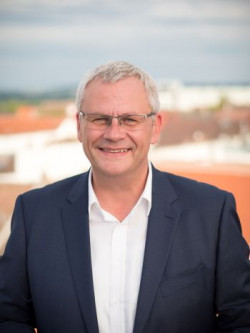
Thomas Steiner, BGM Eisenstadt
Welcome Note from BGM Thomas Steiner
Liebe Teilnehmerinnen und Teilnehmer!
Herzlich willkommen in der kleinsten Großstadt der Welt! Die burgenländische Landeshauptstadt ist zweifelsohne auch die Bildungshauptstadt des Landes. Von der Kinderkrippe bis zur Fachhochschule bietet unsere Stadt ein breitgefächertes Bildungsangebot für nahezu jedes Interessensgebiet.
Einrichtungen wie das MEP Austria begrüße ich von ganzem Herzen. Denn so wird Jugendlichen, eine toller Einblick in den demokratischen Prozess der Meinungs- und Mehrheitsfindung geboten. Gerade Jugendliche, die kurz davor sind in den demokratischen Prozess der Mitbestimmung einzutreten, können hier wichtige Erkenntnisse und Erfahrungen für ihren Lebensweg mitnehmen.
Ich wünsche allen Teilnehmerinnen und Teilnehmern gute und konstruktive Gespräche sowie viel Spaß und schöne Tage im Burgenland!
Mag. Thomas Steiner
Bürgermeister der Landeshauptstadt Freistadt Eisenstadt
Programme
See Downloads section
Committees & Issues
1 Committee on Environment, Public Health and Food Safety (ENVI)
The question of dealing with greenhouse gas emissions from livestock:
Livestock production: a leading contributor to greenhouse gas emissions and a leading cause of deforestation and water pollution. Should European countries like the recent example of the Netherlands take steps to reduce the environmental impact of the livestock industry, and if so, how can the potential economic implications for farmers be offset?
2 Committee on Culture and Education (CULT)
The question of dealing with the challenges posed by the inclusion of migrant youths in the economy and society:
With Europe faced with an increasingly ageing society how can migrant youths whether asylum seeker, non-EU and EU be better integrated into the education, training and employment? In Europe’s continued quest to be the world’s Nr 1 knowledge-based economy and society, how can governments guarantee that no young person is left behind, but rather that his/her full potential is tapped?
3 Committee on Employment and Social Affairs (EMPL)
The question of dealing with employment challenges posed by digitalisation:
With the increasing spread of automation and digital technologies (eg. internet of things) replacing many low to middle-skilled jobs, how can the EU Member States ensure employment in increasingly difficult economic times?
Which measures can be taken to avoid large-scale unemployment?
4 Committee on Transport and Tourism (TRAN)
The question of dealing with mass tourism in UNESCO protected heritage sites and monuments:
As the tourism industry continues to expand and place an unsustainable burden on Europe’s cultural heritage sites, how can EU governments protect their heritage sites and monuments while enabling visitors’ accessibility. Which measures can be taken to ensure the preservation of the sites and the livelihood of citizens dwelling in the surrounding areas?
Downloads
